The F-14A
Central Air Data Computer
MP944 Microprocessor

Wall Street Journal Article
with Comments from Ray Holt in white

| Home | Wall Street Journal Article |
| F14 Design Paper | Reviewer's Comments | Electronic Business Magazine Article (search for Ray Holt) |


September 22, 1998

Yet Another 'Father' of the Microprocessor
Wants Recognition From the Chip Industry


By DEAN TAKAHASHI
Staff Reporter of THE WALL STREET JOURNAL

For years, three former Intel Corp. engineers have been known as the "Fathers of the Microprocessor," [ Really, the developers of the general purpose single chip central processing unit (CPU)] the invention that launched the digital [microprogrammed, not digital] revolution. [digital has been around since the 1950's]

Now another determined engineer says he deserves the title.

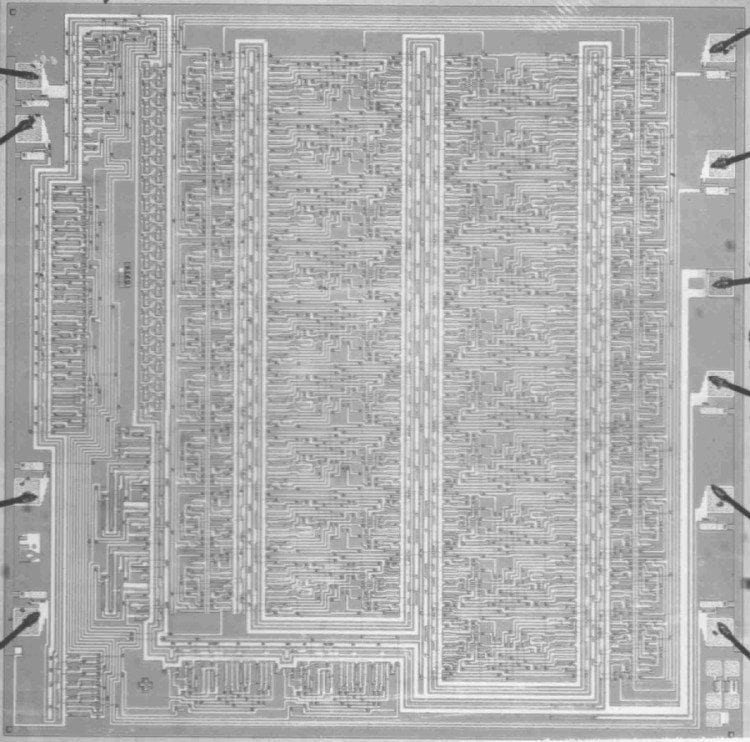
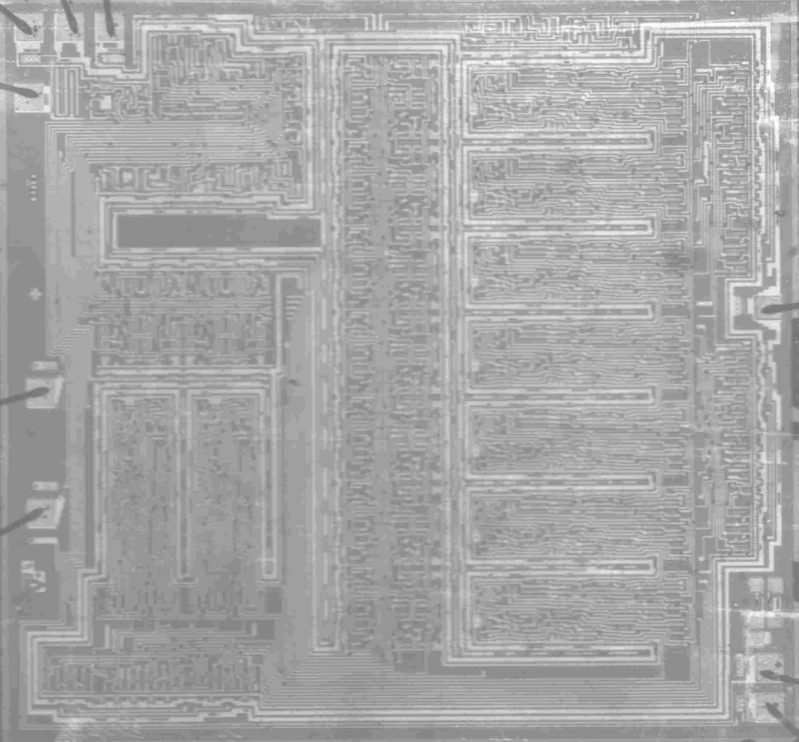
Raymond Holt, a 53-year-old computer consultant from San Jose, Calif., says that in 1969 [I started the design in 1968 and completed it in 1969] he and a team of 25 engineers created the first microprocessor, for the U.S. Navy's F-14A "Tomcat" fighter jet, at a time when Intel's effort was just beginning. It wasn't until 1971, he points out, that Marcian "Ted" Hoff, Federico Faggin and Stan Mazor integrated the basic elements of a computer onto a single silicon chip, creating a device that now sells billions of units a year.

Because Intel never applied for or received a far-reaching patent on the microprocessor, the company left itself and the engineering trio vulnerable to people who keep surfacing [those that surface have no relationship to Intel's effort. It is no secret that integrated circuit computer design occurred way before Intel. Why would a patent by Intel stop those that created something before from surfacing?] to say they got the idea first. Messrs. Hoff, Faggin and Mazor have heard such claims before [and I am sure they will be hearing more].

"You know the saying, 'Success has many fathers,' " fumes Mr. Faggin, who now runs a chip-design company in Santa Clara, Calif.[Sounds like a bitter response to the truth. If Mr. Faggin really knew his computer design, he would acknowledge the work that went on before his effort. Does he doubt the IBM 360 existed?]

Collaborative Nature

Indeed, the collaborative nature of the invention is the reason company lawyers back then didn't think the three engineers had anything to patent, Mr. Hoff recalls. It is problematic to call the microprocessor an "invention," he says, when "every invention rides on the shoulders of past inventions."

The microprocessor stems from the transistor, which was invented in 1948 by researchers at Bell Labs, now a Lucent Technologies Inc. unit, and from the silicon chip, known formally as the integrated circuit, which Intel's founder Robert Noyce and Jack Kilby of Texas Instruments Inc. invented in 1958-59.

It was only a matter of time, Mr. Faggin says, before the computing engines of the refrigerator-size minicomputers could be squeezed onto a single silicon chip.

Mr. Holt, who directed the F-14A flight-computer-chip design team with another engineer, Steven Geller, kept the nature of his achievement quiet all these years because, he says, his work was classified by the U.S. Navy. "We were thrilled [at the [accomplishment, not discovery] discovery], but we couldn't tell anyone," Mr. Holt says. At the time, he worked at a Southern California aerospace firm, Garrett AiResearch Corp. which is now part of AlliedSignal Corp. Today he is a self-employed [network and Internet] consultant who assembles computers and trains people to use them.

Mr. Holt wrangled for decades with the Navy and his former employer to declassify and release the documents that back up his claim. Finally, in 1997, with the help of his congresswoman, Rep. Zoe Lofgren (D., Calif.), the Navy did.

Claim Disputed

The former Intel engineers dispute Mr. Holt's claim [it appears from their alleged comments that they did not even look at the F14 design]. They say their achievement was putting a complete computer on a single chip [this must be a misquote because I am sure even Hoff and Faggin would not say they put a complete computer on a single chip. Maybe more like a central processing unit on a single chip - a far cry from a complete computer. No one has put a complete computer on a single chip to this day]. Their invention was inexpensive and marketable as a versatile, general-purpose device that could be used in everything from toasters and hearing aids to personal computers [absoultely true - most consumer types of applications, including personal computers did not come until 1976]. By contrast, Mr. Holt's solution was bulky [I would not say a 4" x 6" pc card was bulky compared to the tons of extra circuits required to make the 4004 and 8008 operate in 1973 and 1976, 5-7 years later], they say, requiring three processor chips and three support chips [that's correct - and nothing else]. It had harder tasks to fulfill [slightly], such as simultaneously calculating air speed, wing position and altitude [and hundreds of other calculations and at military specs, and controlling a dogfighting fightjet shooting off missles at six different enemy planes. I would like to see a 4004, 8008, 8080, or 80286 do that], . So Mr. Holt couldn't have competed with them on cost [cost is and never was a requirement for comparing computer architectures, otherwise, the Intel marketing machine would have trouble justifying they prices.] . As such, Messrs. Hoff and Faggin say, Mr. Holt's chips wouldn't have changed history, even if anyone had known about them. [a clear indication of a lack of knowledge of computing machines].

"There were lots of people exploring chip technology," recalls Mr. Hoff, now a litigation consultant in Los Altos Hills, Calif. "But we were the first to put a computer's central processing unit on a single chip [YES, the central processing unit only, and most of us would agree this occurred with the 8008. The 4004 is still a very debateable product]. And we did it at a cost that could lead to very high volumes."

But Mr. Holt says a microprocessor doesn't have to be on one chip [that's right, a microprocessor is a microprocessor, a single-chip CPU is a single-chip CPU], and argues it isn't fair [actually, I did not say 'isn't fair', I said it did not make sense to apply a definition created two years later to an earlier design] to let a biased party such as Intel [including Hoff and Faggin] define which chips are microprocessors and which aren't.

Russell Fish, a former Motorola Inc. chip designer in Dallas, has reviewed Mr. Holt's work and believes it was indeed a microprocessor, and far more advanced than anything else at the time.

"It's unfortunate this was classified," said Mr. Fish. "The company that had this technology could have become Intel [this company was American Microsystems, Inc. of Santa Clara, CA]. It could have accelerated the microprocessor industry at the time by five years."

Narrow Uses

Others disagree, saying Mr. Holt's chips were designed for very narrow uses and performed better because he opted for an expensive solution, putting a processor on three chips instead of one. [the F14 microprocessor chip set was at least five times the complexity of the 4004 created two years later.]

"It was meant to keep an airplane flying, [that's right, and not to set on an office desk as a calculator " says Richard Belgard, a microprocessor expert in Saratoga, Calif., who has reviewed Mr. Holt's designs. "It was very innovative for the time and a good technical achievement. But I wouldn't call it a microprocessor." [he would not call it a single-chip CPU, however, it definitely is a microprocessor to those who know logic design and computer architecture].

Mr. Holt is far from alone in claiming paternity. Lee Boysel, founder of Four Phase Systems Inc., a Silicon Valley computer company acquired by Motorola Inc. in the late 1970s, says his team created the first microprocessor in 1969. Although his critics also say that his chips weren't truly microprocessors and that they were sold only as parts of larger computers, he received belated recognition in 1996 at an industry event honoring computer pioneers.

Another Claimant

Gary Boone, a former Texas Instruments engineer, also sought the title. In 1971 he invented TI's version of the microprocessor, which served as a calculator's brain, and received the first patent for one. His collection of patents was useful in defeating the claims of Gilbert Hyatt, another late claimant, who surfaced in 1990. Mr. Hyatt was widely criticized as a carpetbagger because he never built more than one prototype, yet he, too, received a patent and tried to get millions of dollars in royalties from companies that built the industry. The patent was overturned.

Mr. Holt says his motivation isn't money. The Navy never allowed his employer to commercialize the chips or apply for patents. He has no legal basis to extract royalties from microprocessor manufacturers.[if someone knows of a legal basis, let me know . . . I have several non-profits that could benefit.]

The Navy now claims that Mr. Holt's work wasn't classified after all and suggests what Mr. Holt really needed was approval from his former company for release of records. Garrett officials say they aren't sure what occurred, because those familiar with the case are no longer at the company.

This week Mr. Holt will officially launch a campaign to make his name. On Saturday he will be a featured speaker at a gathering of Silicon Valley computer buffs, the Vintage Computer Festival in Santa Clara, Calif., where he will be joined by members of his original team and publicly discuss his invention for the first time. He has put up a Web site [this one] with position papers and documentation that support his claim.

"I'm probably too late to be in the history books," Mr. Holt concedes soberly. "But maybe I'll be a footnote." ["Actually, I think this design team effort is significant and deserves to be recognized in computer history, it's impact is already recognized in aircraft history"]

Your comments are welcomed!


| Home | Wall Street Journal Article |
| F14 Design Paper | Reviewer's Comments | Electronic Business Magazine Article |


(c) Copyright 1998 - 2008 Ray M. Holt ALL RIGHTS RESERVED